

AB ANTIQUO. European Architectural Culture and East Adriatic Antiquities
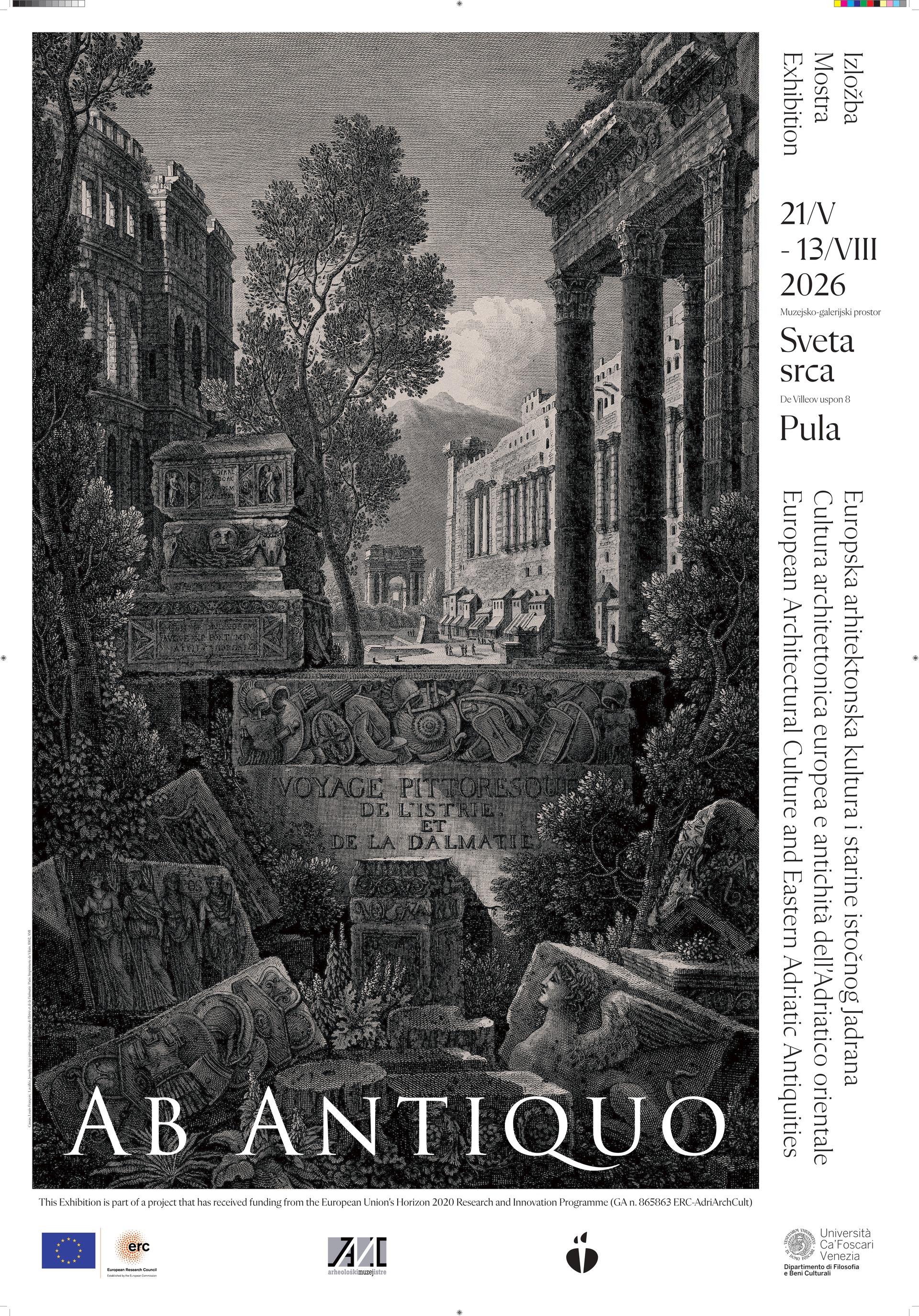
The exhibition AB ANTIQUO. European Architectural Culture and the Antiquities of the Eastern Adriatic presents, for the first time, a compelling story of the regional and European reception of the ancient heritage of the Eastern Adriatic coast through original drawings, prints, rare books, and Renaissance and Baroque architectural treatises.
The exhibition reveals how the Roman remains of Pula, Zadar, Salona, and Split, situated along the major trade routes to the Levant, inspired generations of humanists, artists, and architects across Europe. While the ancient monuments of Pula gained international prominence early on through architectural treatises, drawings, and engravings—from Italy to Great Britain—the heritage of Split and other Dalmatian sites resonated deeply within humanist and artistic circles, reaching a broad European audience particularly through the lavishly illustrated books of the eighteenth century.
Particular attention is given to rare historical drawings by Renaissance and Baroque architects active along the Eastern Adriatic, on loan from the Museum of Hvar Heritage and the Abbey Collection in Korčula, as well as to rare copies of architectural treatises bearing annotations by builders and architects, preserved in Croatian libraries—from the National and University Library in Zagreb to the Scientific Library of Dubrovnik, the Scientific Library of Zadar, and the University Library of Rijeka.
AB ANTIQUO guides visitors through four centuries of fascination with the antiquities of the Eastern Adriatic, offering a fresh perspective on the role of the Adriatic in the history of European art and architecture.
Disabled access provided

