

Sufi dance – Whirling Dervishes
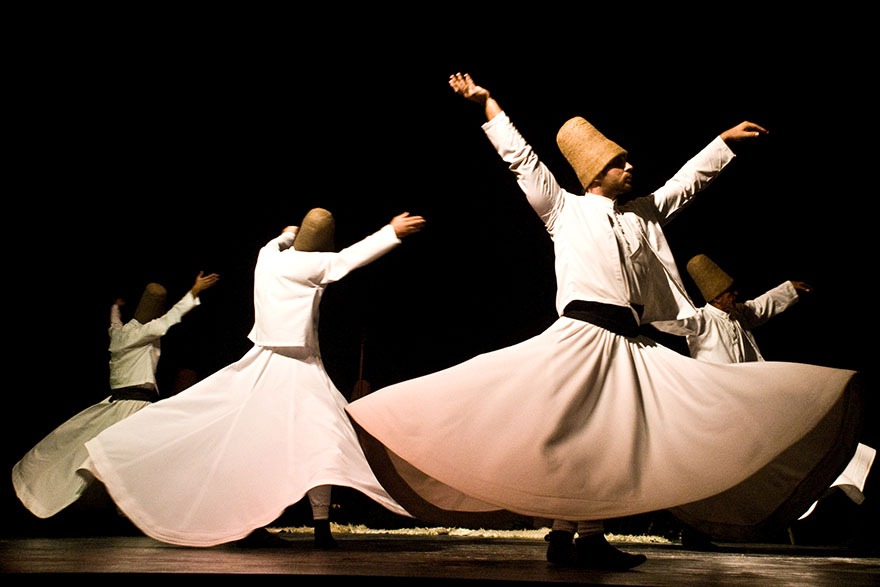
SUFI DANCE – WHIRLING DERVISHES
According to a legend of the Mevlevi Order originating from Rumi, the first sema—the ritual in which the dervish dance is performed—was carried out by Rumi himself around 1249. While standing in front of a craftsman's workshop in the marketplace of the Turkish city of Konya, he heard the rhythmic sounds of a blacksmith's hammer. Intoxicated by the joy of God's presence that he felt, he simply began to dance in a state of ecstasy. And his dance has continued to this day.
The seven-century-old ceremony, sema, still begins with the arrival of the musicians, followed by a long procession of dervishes dressed in long black robes and wearing large cylindrical hats. Finally, the spiritual leader—the sheikh—enters the semahane (the place where the ceremony is held).
The musicians occupy precisely designated places. Among the rows of dervishes are flutists, drummers, reciters, and a choir. Music holds exceptional importance in the Sufi tradition. For Mevlana Jalal al-Din Rumi, after whom the order of the Whirling Dervishes is named, music and dance were a path to enlightenment, a path to God, although he never denied the existence of other possible paths to Truth.
The mystical dance of the Whirling Dervishes, which unfortunately is perceived by most Westerners only superficially—as a commercial dance attraction—is in fact a deeply intimate and astonishingly spiritual journey toward Truth, that is, toward God. It is not a folkloric ritual of some long-forgotten picturesque sect, nor is it a tourist spectacle. Dervishes do not dance for entertainment; they seek their divine origin through dance.
During the dance, they turn inward in order to become aware of all their abilities, their sources, and their ultimate limits. They know that Truth can be revealed to a person only in the depths of their own being, and therefore they do not seek it in the external world.
The Sufi path of knowledge is a path of music, poetry, and dance—these are the keys to the gates of paradise through which Sufis journey toward true Love, which for them is synonymous with God.
Disabled access provided

