

Zdenko Krtić: Wax Boundaries
Disabled access provided

Zdenko Krtić (born 1959) is a Croatian-American artist and Professor Emeritus of Art at Auburn University. He studied painting at the Academy of Fine Arts in Zagreb and later at the University of Cincinnati in Ohio. Since 1988, he has lived and worked in the United States.
His work explores the intersections of memory, politics, natural history, built environments, the effects of time, and other natural phenomena through drawings, paintings, installations, and scenographic works. His artworks have been exhibited in museums and galleries throughout the United States and internationally, and are included in numerous public and private collections.
Krtić has received numerous grants and awards, including a fellowship from the Alabama State Council on the Arts and Auburn University’s Award for Excellence in Research. He has been a visiting artist three times at the prestigious American Academy in Rome. His work was also recognized by CNN and featured in special online editorial projects, “911 – Ten Years Later” and “Power.”
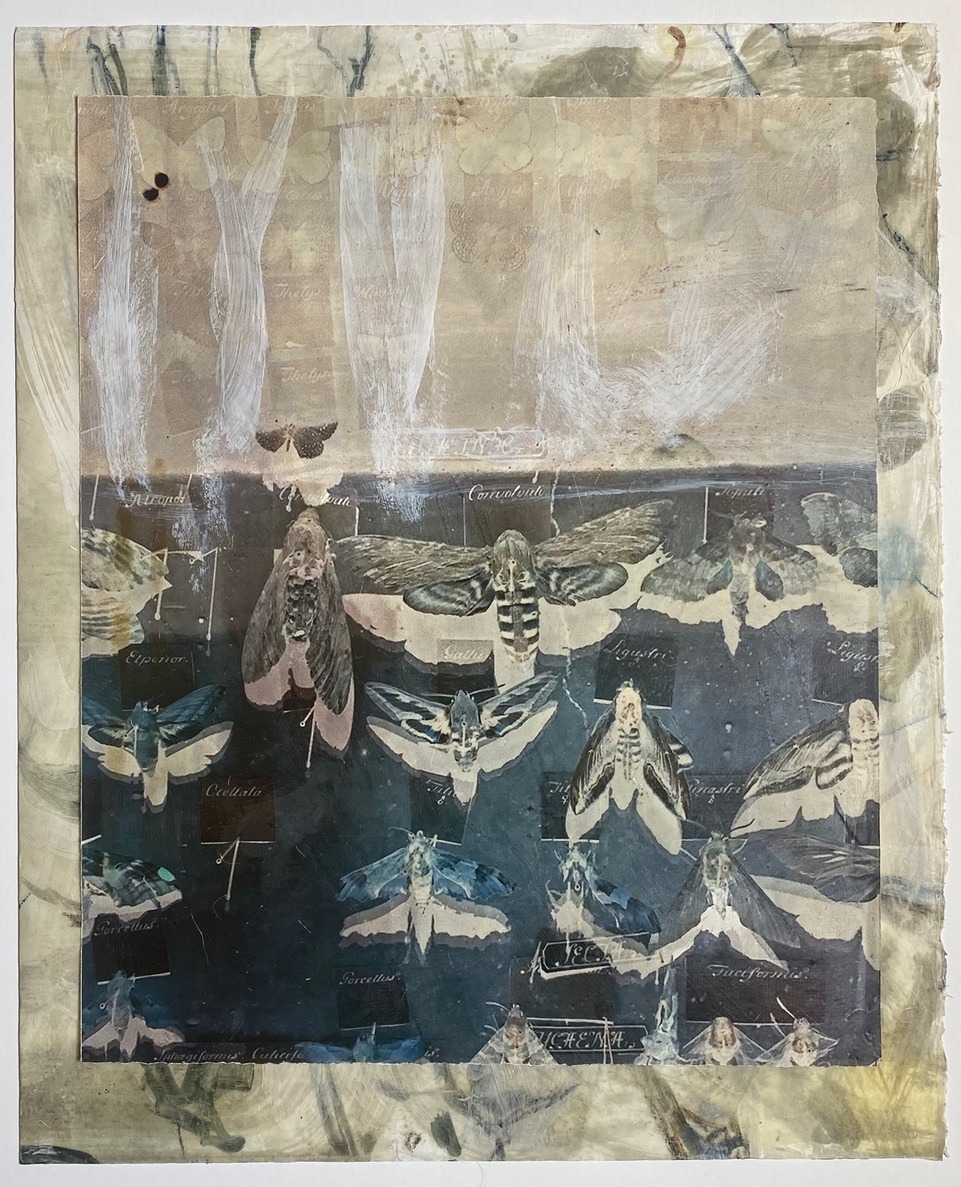
My works represent manifestations of particular ways of seeing, drawing upon both my painterly sensibility and the capacity of the photographic medium to convey truthfulness. While recording subjects, I often direct my gaze obliquely—through screens, sediments, and layers of transparent barriers—or indirectly, by means of reflective surfaces. In this series of photo-based works, I contemplate the relationship between the ethos of life and that of time. How can the act of seeing be translated into the tactile presence of a printed work? How can one capture otherwise indescribable visual sensations and give physical presence to “immaterial” substances such as air, water, and the night sky?
Although these are photographic prints, I view them through the eye of a painter, seeking to approach the representation of nature rather than the precision typically associated with mechanical reproduction. My painterly strategies (and biases) inevitably disturb and destabilize, yet also enrich, the depicted scenes. Through techniques of analogue time segmentation and re-photography, I explore the possibility of fixing a new, uncanny, hybridized reality onto paper. The resulting work becomes a document of collapsed time.
